Art notes
Greetings to everyone who's reading this!
This page is my notes that I've gathered from either books or information found on the internet. So, if you happen to cross this page, please be free to read and even leave a comment :)

ave
Academic art
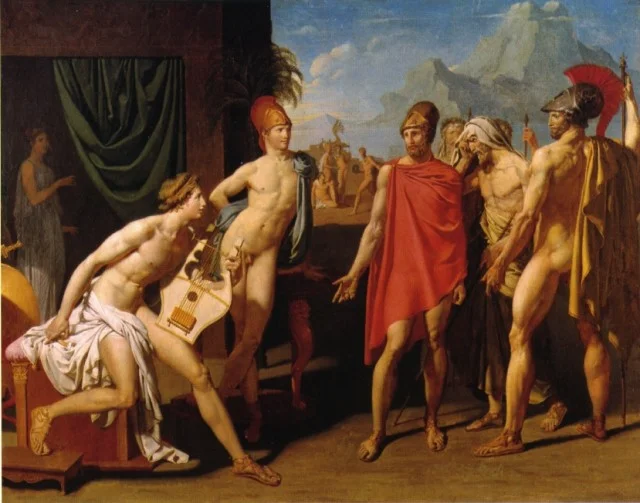
The Envoys of Agamemnon, 1801, oil on canvas, École des Beaux Arts, Paris
The Academy of Art emerged in the 17th century and remained dominant until the 19th century, effectively dictating the artistic life of France.
Many principles regarding how art should be created were established there. This meant that specific types of paintings were expected from artists.
If a painter wanted to achieve fame, attract clients, or receive the Academy's approval, they had to follow these rules.
The Hierarchy of Genres
The Academy decided which subjects were suitable for a painter's brush.
Subjects were divided into higher and lower categories:
Higher
1. Historic painting - Canvases depicting historical events or myths, such as ancient gods, biblical scenes, and battles.
2. Formal portrait - These showed a person's status, wealth, and best qualities. Nude art was also particularly popular at the time.
Lower
1. Scenes from everyday life
2. Landscapes
3. Still life
Fun fact: Still life was considered a mere academic exercise and was not deemed worthy of serious attention.
Technical Standards
Each genre was expected to have a specific canvas size. Large-format canvases were reserved for history paintings. Slightly smaller canvases were used for portraits, while the smallest were for landscapes, scenes of everyday life, and still lifes.
Paintings were made out three steps:
1. Initial Design - applying the sketch to the prepared canvas.
2. Underdrawing - outlining figures in paint to indicate light and shadow.
3. Glaze (painting technique) - a technique where thin, transparent layers of oil paint are applied in the final stage to even out the surface. This gives the painting a smooth, finished appearance and hides all brushstrokes.
The Academic Ideal
The most famous representative of Academic art was Jean-Auguste-Dominique Ingres.
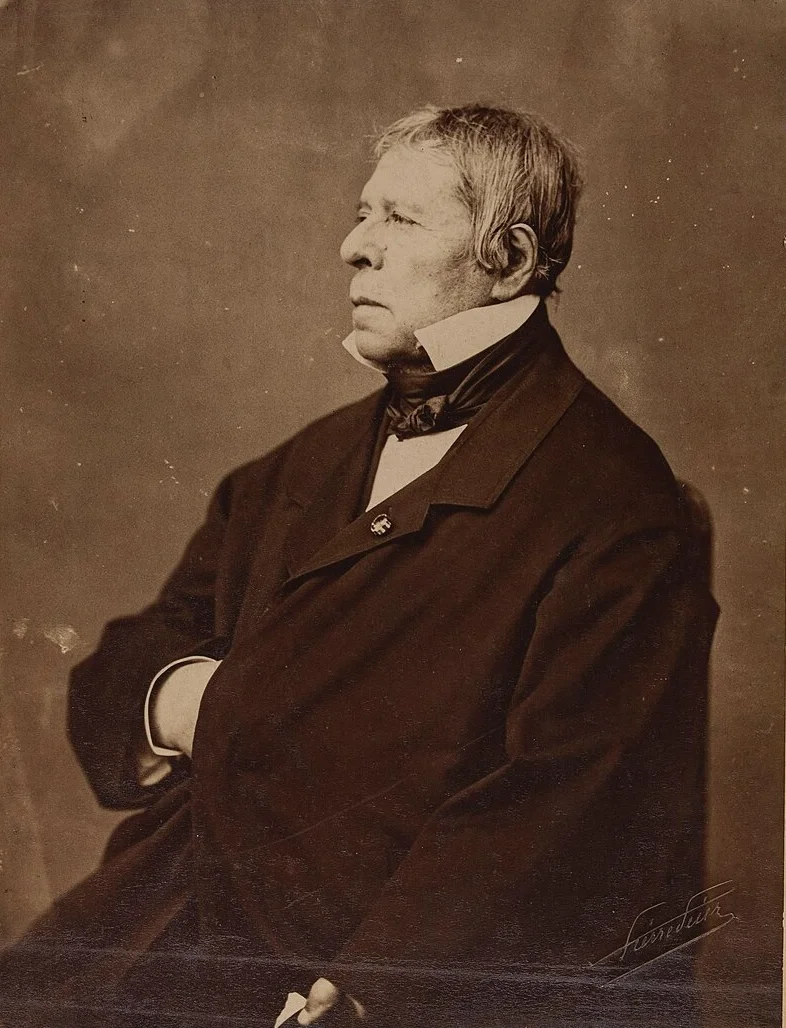
Looking at his work, we see that Academism was based on the ideals of the Renaissance and Classical era (16 - 17 century), when human beauty and global harmony were celebrated.
Even though the world had changed since the 16 century, "official" art did not deviate from the norm established centuries prior.
In Ingres work, we see historical figures from different eras who astonish us with their beauty and spirituality. Athletic builds, proportional bodies, calm faces with noble Greek profile, and military armor symbolizing virtue were a recurring themes.
The Role of the Nude
A special subject that allowed painters to showcase their skills and evoke admiration was the nude. Ingres and other academicians often featured nudity, as the paintings were favorites among wealthy clients.
These figures amazed viewers with their elegance, graceful lines, and flawless, pale skin. A perfect example of this would be "La Grande Odalisque" (1814).
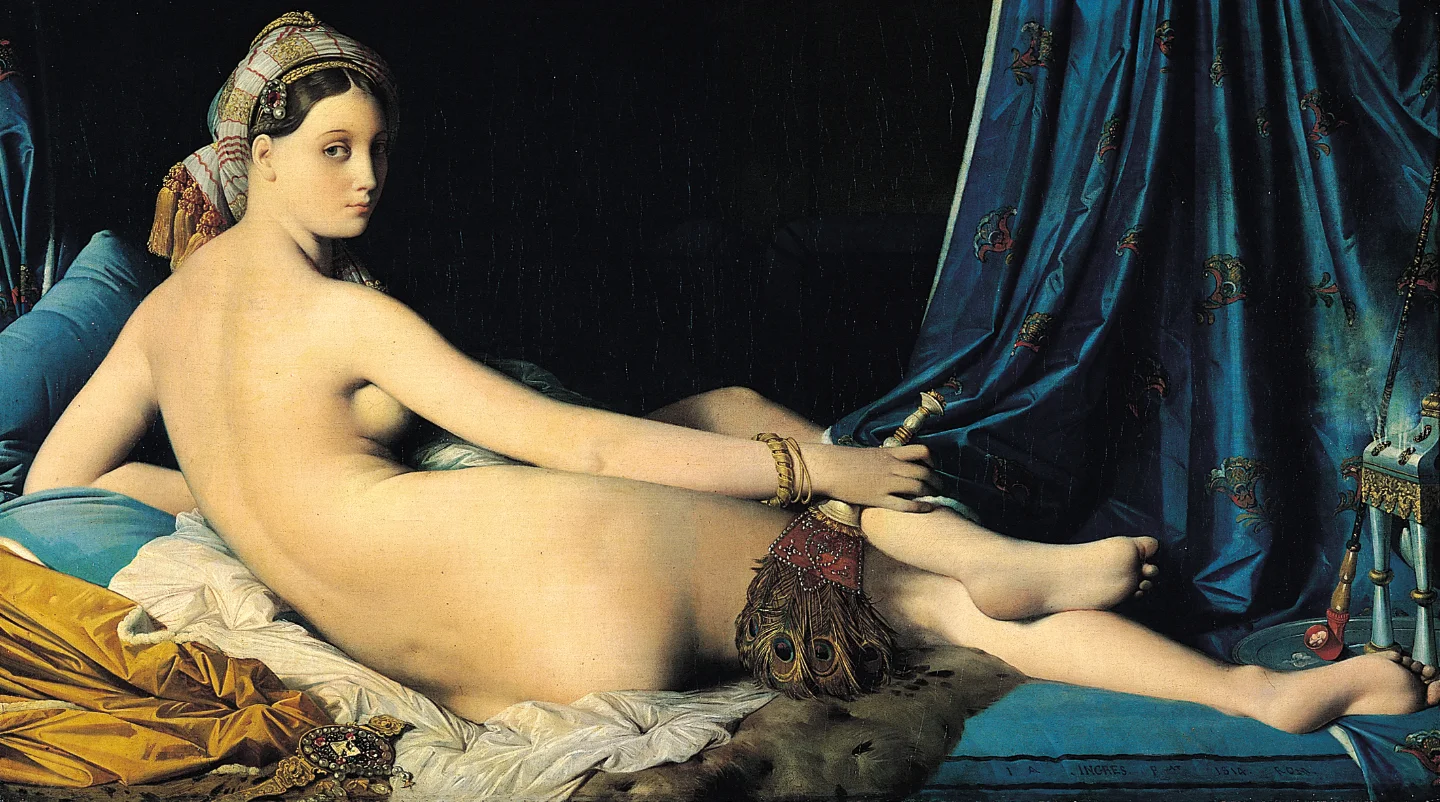
This depiction of a woman from a harem in a complex pose allows the viewer to admire the beauty of her body.
We see how the curve of her back mirrors the bend of her arm, creating a delicate feminine silhouette.
The most important element in these paintings is light, which sits evenly on the surface, hiding physical flaws. Furthermore, this lighting highlights exquisite details - not only the body but also expensive fabrics, peacock-feather fans, furs, and pearls.
A thorough depiction of magnificent figures hypnotized the viewers and enhanced the value of the painting.
Ultimately, the more expensive the objects depicted, the more valuable the painting become.
This encouraged painters to create canvases rich in exquisite materials and detail.
